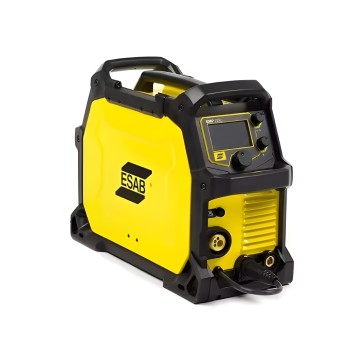
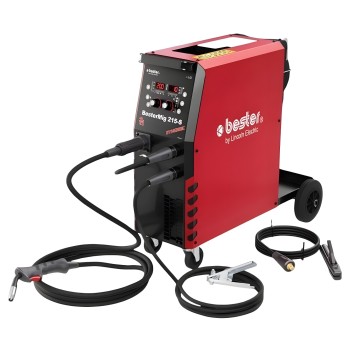
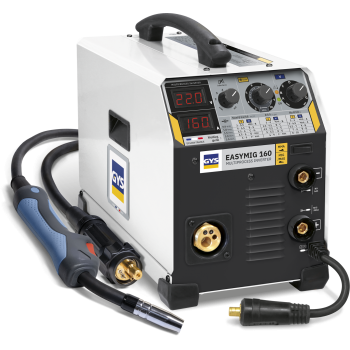
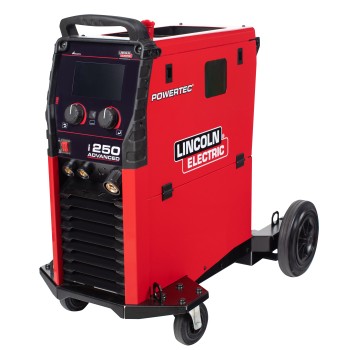
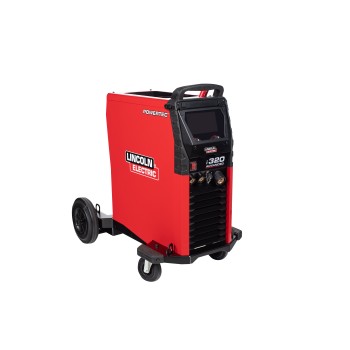
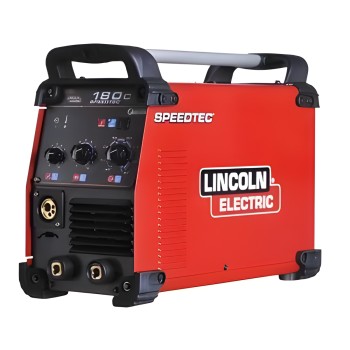
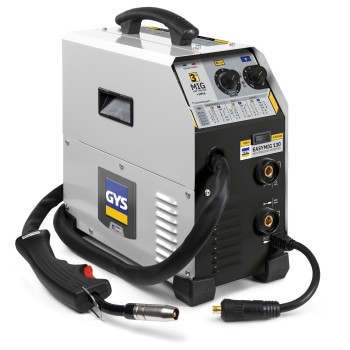
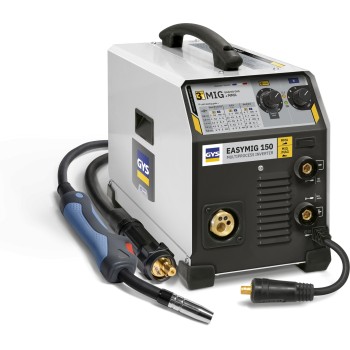
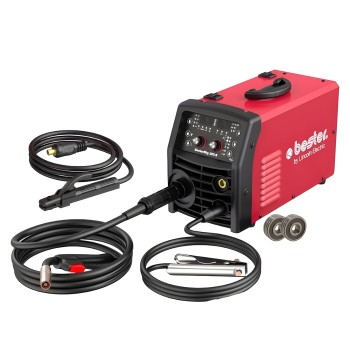
The MIG Inverter welder combines the simplicity of semi-automatic welding with the lightness and precision of the latest-generation electronics. Gone are the heavy transformer-based machines: Inverter technology has revolutionized MIG/MAG welding by offering compact, high-performance and easy-to-adjust power sources. Discover our range of MIG Inverter welders, designed for beginners and experienced welders alike.
Inverter technology explained
A MIG Inverter welder converts mains current at very high frequency before transforming it. This electronic architecture drastically reduces the weight and size of the unit, while delivering a more stable arc and much finer adjustment than a traditional transformer-based machine. The welder gains in comfort, portability and weld bead quality, which explains the success of these power sources on the current market.
MIG, MAG: what is the difference?
The MIG/MAG process relies on a continuously fed wire electrode and a shielding gas. In MIG, an inert gas (argon) is used for aluminum; in MAG, an active gas (argon-CO₂ mixture) is used for steel and stainless steel. To supply your welder, you will need a MIG/MAG gas cylinder and a wire spool suited to the metal being worked. If you are still undecided between the main welding processes, our MMA welder section presents an alternative for outdoor work.
Everyday advantages
The MIG Inverter welder excels through its versatility. It welds quickly, cleanly, and allows continuous weld beads without changing electrodes as in MMA. Synergic models simplify operation even further: simply select the metal type and wire diameter and the machine automatically adjusts the voltage and wire feed speed. Ideal for progressing quickly and achieving great welds from the very first attempts.
Choosing the right MIG Inverter welder
Assess the maximum amperage based on the thicknesses to be welded, then the duty cycle for endurance. A robust multi-roll wire feeder ensures a steady wire feed, without jerking or jams. Also check compatibility with gasless flux-cored wire, which is practical for outdoor use. To explore the full range of semi-automatic machines, visit our semi-automatic MIG-MAG welder page and the single-phase 220 V models.
Essential accessories
A MIG Inverter welder comes with a quality MIG torch, contact tips of the right diameter and appropriate drive rolls. To move your setup easily, opt for a welder cart. And do not forget your protection: an auto-darkening welding helmet and welding gloves are essential from the very first arc.
Synergic or manual welder?
When choosing your MIG Inverter welder, the distinction between a manual model and a synergic model is crucial. On a manual welder, you set the arc voltage and wire feed speed yourself, which requires experience to find the right balance. On a synergic welder, simply entering the metal type, wire diameter and gas allows the electronics to automatically calculate the optimal parameters. For beginners or for saving time in production, the synergic model is a considerable asset: it guarantees consistent weld beads from the very first attempts and reduces the margin for error.
MIG welding aluminum
Aluminum is a special case in MIG welding. Softer than steel, aluminum wire deforms easily in the wire feeder: a Teflon-lined torch, appropriate drive rolls and ideally a push-pull feeder for longer distances are required. Shielding is done with pure argon, not an argon-CO₂ mixture. Not all MIG welders handle aluminum correctly: check this compatibility if you work with this metal. For precise, thin aluminum assemblies, the AC/DC TIG welder remains the benchmark in terms of finish quality.
Manual or synergic MIG Inverter welder| Welder type | Advantages | Who is it for? |
|---|
| Manual | Full voltage/wire speed control | Experienced welders or specific settings |
|---|
| Synergic | Simplified settings based on metal and wire | Beginners, workshops looking to save time |
|---|
| Multi-process | MIG/MAG + MMA + sometimes Lift TIG | Versatile users with varied needs |
|---|
Our advice
For versatile workshop and bodywork use, a synergic MIG Inverter welder of 160 to 200 A represents the best compromise. It will allow you to weld steel, stainless steel and aluminum with the appropriate gas, while remaining portable. Compare our models, check the included processes and choose the power source that will reliably accompany your fabrication and repair projects.


 Italy
Italy
 Germany
 Croatia
 Denmark
 Finland
 Greece
 Ireland
 Portugal
 Sweden
 Norway
 Bulgaria
 Estonia
 Latvia
 Lithuania
 Poland
 Czech Republic
 Romania
 Slovakia
 Slovenia
 Hungary
 Spain
Spain



 2-year warranty