Stainless steel weld passivation: stainless steel passivation product | stainless steel weld pickling

Active filters

Filter by

Brand

Brand

By choosing a welding machine on the EURO-WELDING website, you are guaranteed that it is designed by a French or European manufacturer complying with the EN 60974-1 manufacturing standard.

Compliance with this EN 60974-1 standard by the manufacturer guarantees that the equipment produced is intended for industrial and professional use, and that with regard to the rules relating to electromagnetic compatibility, this equipment is rated class A.
It is your responsibility to check the following points before any use
- That the electrical network used when operating this type of equipment is properly earthed
- That the electrical line to which you connect the welding machine is controlled by a fuse whose amperage is in line with that indicated on the nameplate of the machine or that indicated in the supplier's manual.
Depending on the model of machine that interests you, specifically its power in Amperes or its type of current (single-phase or three-phase), it is your responsibility to contact your electricity supplier to ensure that you have the appropriate subscription.
-Pacemaker wearers should consult a doctor before using this equipment. Exposure to electromagnetic fields during welding may have other effects on health that are not yet known.
As a general rule, as with any other tool, it is essential to read the user manual provided with the machine, including the safety instructions, before using this equipment.

Active filters

favorite_border favorite
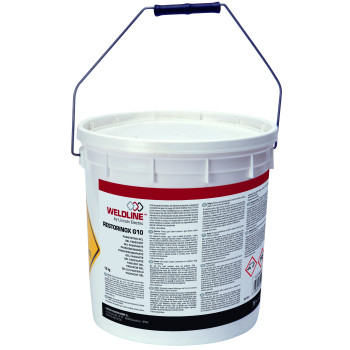
WELDLINE - RESTORINOX GEL for stainless steel

In stock

Weldline

Reference: RESTORINOX-G

(2 reviews)

€24.20

20,00 € tax excl.

Fast delivery

2-year warranty

Final treatment phase to restore the stainless property of steel

Available in 2 and 10 kg pots in gel form

This is the final phase of the entire process, necessary to restore the stainless property of steel.
This removes contamination from the surface of stainless steel after various work phases and thus regenerates the oxide layer that gives stainless steel its properties.
In fact, this work phase recreates the chrome layer damaged by heat, while reducing the spontaneous oxidation time.
Through this process, the oxide layer that protects against external agents is restored.
How to use RESTORINOX?
First, degrease and pickle the area to be treated with the specific products CLEANOX and PICKLINOX. Then apply the product.
Rest times will vary from 20 to 60 minutes.
At the end of the treatment, rinse the product with water. Do not expose the product or the treated surface to sunlight or any atmospheric agent.
Combinations Price quantity
favorite_border favorite
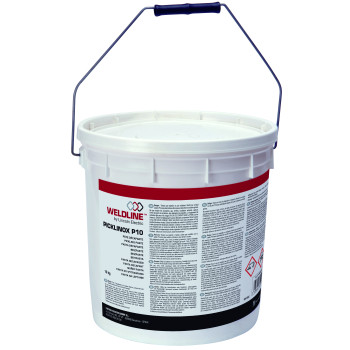
WELDLINE -PICKLINOX- PASTE Stainless Steel Pickling Agent

In stock

Weldline

Reference: PICKINOX-P

(4 reviews)

€23.69

19,58 € tax excl.

Fast delivery

2-year warranty

Removes oxides after stainless steel welding.

Available in 2 kg and 10 kg jars in paste form

Pickling is the operation that removes all oxides after welding, by eliminating the surface layer depleted as a result of heat treatment.
It is the most important step in the treatment process.
It should be noted that a weld bead is a surface that has been heated and generally loses its stainless properties.
For these reasons, the pickling operation does not only mean cleaning the weld beads but primarily consists of restoring the characteristics of stainless steel.

How to use Picklinox paste?

Degrease the surface to be treated with the specific product CLEANOX.
Then apply a layer of paste.
Rinse with water after a variable period depending on the grade of stainless steel and the type of welding (up to 30 minutes).
Do not expose the product or the treated surface to sunlight or any atmospheric agent.

Combinations Price quantity
favorite_border favorite
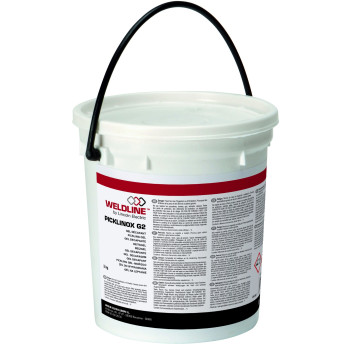
WELDLINE - PICKLINOX- GEL Stainless steel pickling agent

In stock

Weldline

Reference: PICKLINOX- GEL

(4 reviews)

€24.71

20,42 € tax excl.

Fast delivery

2-year warranty

Removes oxides after stainless steel welding.

Available in 2 kg and 10 kg tubs in gel form

Pickling is the operation that removes all oxides after welding, by removing the surface depleted as a result of heat treatment.
It is the most important step in the treatment process.
It must be taken into account that a weld bead is a surface that has been heated and generally loses its stainless properties.
For these reasons, the pickling operation does not simply mean cleaning the weld beads but primarily consists of restoring the stainless steel's characteristics.

How to use Picklinox paste?

Degrease the surface to be treated with the specific product CLEANOX.
Then apply a layer of paste.
Rinse with water after a variable time depending on the grade of stainless steel and the type of welding (up to 30 minutes).
Do not expose the product or the treated surface to sunlight or any atmospheric agent.

Combinations Price quantity
favorite_border favorite
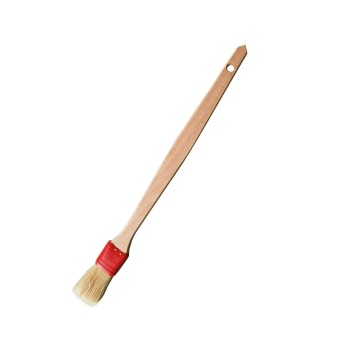
DBP |Acid-resistant brush for stainless steel passivation, wooden handle

dbp

Reference: MATTRA127

€12.80

10,58 € tax excl.

Fast delivery

2-year warranty

This brush is used for applying stainless steel cleaning products.
Wooden handle, acid-resistant.

Brush width 30 mm
Handle length 30 cm

favorite_border favorite
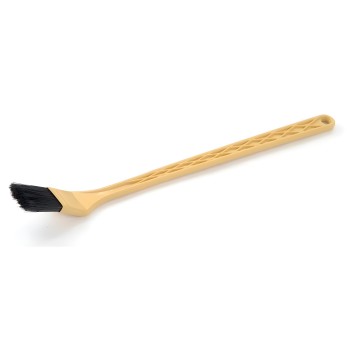
DBP | Angled acid-resistant brush for stainless steel passivation

dbp

Reference: MATTRA0232

(2 reviews)

€10.99

9,08 € tax excl.

Fast delivery

2-year warranty

This brush is used for applying stainless steel cleaning products.
Plastic handle, acid-resistant.

Brush width 30 mm
Handle length 30 cm

favorite_border favorite
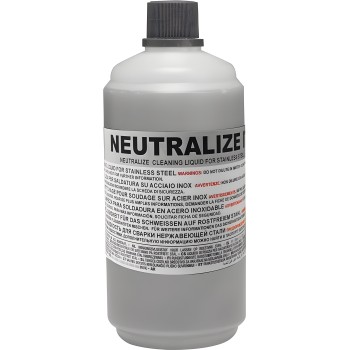
NEUTRALISE IT 1L can

In stock

Telwin

Reference: 804139

(1 review)

€26.72

22,08 € tax excl.

Fast delivery

2-year warranty

Stainless steel weld cleaning liquid for small weld beads
1 L can.
Applied with a suitable brush. Reference 981863

favorite_border favorite
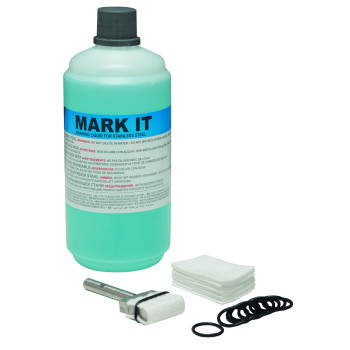
Marking kit

Supplier stock

Telwin

Reference: 804028

€88.73

73,33 € tax excl.

Fast delivery

2-year warranty

Marking kit for Cleantech 200 Telwin

favorite_border favorite
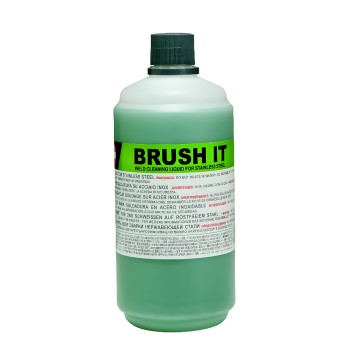
BRUSH IT 1L or 5L container

In stock

Telwin

Reference: BRUSH IT

(4 reviews)

€27.13

22,42 € tax excl.

Fast delivery

2-year warranty

Stainless steel weld cleaning liquid for small weld beads
1 L or 5 L container.
Applied with a suitable brush. 

Combinations Price quantity
favorite_border favorite
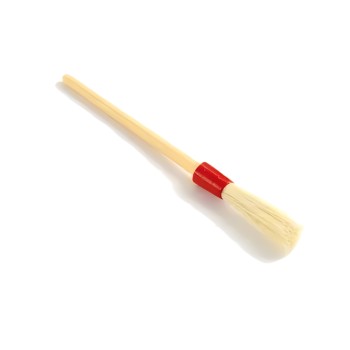
DBP | Round acid-resistant brush for stainless steel passivation

Lincoln Electric

Reference: W000267116

(1 review)

€6.81

5,63 € tax excl.

Fast delivery

2-year warranty

This brush is used for applying stainless steel cleaning products.
Plastic handle, acid-resistant.

Two diameters available: 6 and 8 mm

Combinations Price quantity
favorite_border favorite
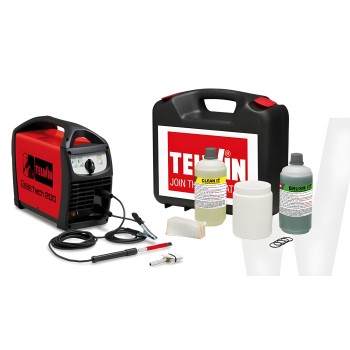
Cleantech 200 Telwin
Save 7%

In stock

Telwin

Reference: 850020

(5 reviews)

€835.91

€898.82

690,83 € tax excl.

or 4 x 208,98 €

Free delivery

2-year warranty

This device uses an instantaneous electrochemical reaction to restore the shine of stainless steel.
It eliminates the discoloration and oxidation effects that form during the welding process.
Compact and lightweight, it is easy to transport.
It also allows marking on stainless steel (optional).

In addition to the device, the delivery includes the small case shown in the photo containing:
1 L of Clean-IT
1 L of Brush-it
1 pot with lid
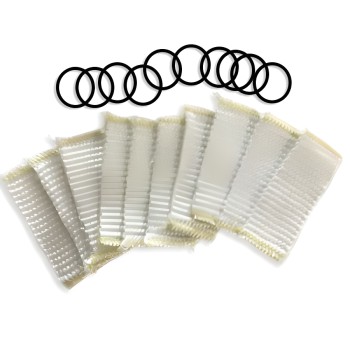
10 cleaning pads + fixing clips
1 wedge-shaped tool dedicated to the use of the cleaning pads
1 brush and fixing support

favorite_border favorite
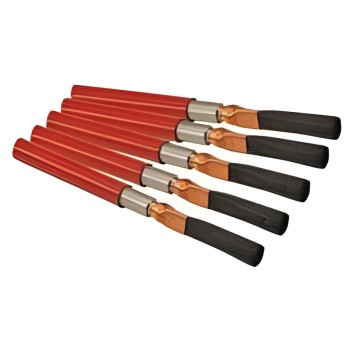
Cleaning brush kit

In stock

Telwin

Reference: 981863

(2 reviews)

€90.24

74,58 € tax excl.

Fast delivery

2-year warranty

Cleaning brush kit for Cleantech 200 Telwin
This item is used when cleaning with the BRUSH IT cleaner
These brushes are suitable for cleaning small weld beads

favorite_border favorite
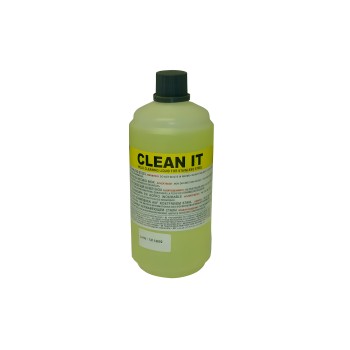
CLEAN IT 1L container

In stock

Telwin

Reference: 804031

€29.25

24,17 € tax excl.

Fast delivery

2-year warranty

Stainless steel weld cleaning liquid for wide or long weld beads
1 L container.
Applied with a suitable pad. Reference 981866

favorite_border favorite
Cleaning pad kit

In stock

Telwin

Reference: 981866

€40.23

33,25 € tax excl.

Fast delivery

2-year warranty

Cleaning pad kit for Cleantech 200 Telwin
This item is used when cleaning with the CLEAN IT cleaner
These pads are suitable for cleaning large weld beads

Treating stainless steel after welding is essential to restore its corrosion resistance. Pickling removes the oxides formed by heat, and stainless steel passivation regenerates the protective layer. Discover our pickling and passivation products for clean and durable stainless steel welds.

Why treat stainless steel after welding?

The corrosion resistance of stainless steel comes from a thin chromium oxide layer on the surface. Welding locally destroys this layer and leaves coloured oxides (heat tints) around the weld bead. Without treatment, these areas become susceptible to corrosion. Stainless steel weld passivation restores the natural protection of the metal and preserves the durability of the assembly.

Stainless steel pickling

Pickling is the first step: it removes the oxides and heat tints created by the welding heat. Carried out with a stainless steel pickling agent (often a gel or acid bath), it deep-cleans the surface. Pickling restores the uniform appearance of stainless steel and prepares the surface for passivation. It is a key step for visible and exposed welds.

Stainless steel passivation

After pickling comes stainless steel passivation. This treatment, generally based on a suitable acid, regenerates the passive chromium oxide layer that protects stainless steel from corrosion. Passivating stainless steel is essential for parts exposed to moisture, splatter or aggressive environments. This step is what guarantees the long-term durability of the weld.

Mechanical or chemical pickling?

There are two complementary approaches. Mechanical pickling (brushing with a dedicated stainless steel brush, grinding) removes oxides by abrasion. Chemical pickling, using a stainless steel passivation acid, acts in depth and treats the heat tints that brushing leaves behind. For an optimal result, mechanical cleaning and chemical treatment are often combined.

Safety instructions

Pickling and passivation products are acids: they require strict precautions. Wear gloves resistant to chemicals, eye protection, and work in a well-ventilated area. Follow the application times and rinse thoroughly after treatment. Always read the product instructions before use.

For which stainless steels?

Stainless steel treatment concerns all welded grades exposed to corrosion. It is particularly important for food-grade, sanitary or outdoor parts. A stainless steel rod of the appropriate grade and careful welding limit oxides, but pickling and passivation remain necessary for complete protection.

Pickling by gel or by bath

Stainless steel pickling is carried out in two ways depending on the parts. Pickling gel is applied with a brush to the weld bead and its surroundings: convenient for localised welds and large parts. A pickling bath, in which the part is immersed, is suitable for small elements treated in series. In both cases, the stainless steel pickling agent acts chemically on the oxides; the application time must be respected and then rinsed thoroughly with clean water.

When to treat stainless steel welds

Any stainless steel assembly exposed to corrosion deserves post-weld treatment, but certain applications make it indispensable: food-grade parts, sanitary equipment, outdoor fixtures or humid and aggressive environments. The more severe the exposure, the more critical stainless steel weld passivation becomes. Careful welding with a suitable stainless steel rod limits oxides, but does not eliminate the need for pickling and passivation: these steps remain the guarantee of long-term corrosion resistance.

A simple action that extends service life

Considering stainless steel treatment as an optional step is a common mistake. An untreated stainless steel weld corrodes precisely where it was heated, defeating the very purpose of having chosen stainless steel. A few minutes of pickling and stainless steel passivation considerably extend the service life of the work. It is a simple, low-cost action that makes the difference between a lasting result and one that deteriorates prematurely.

Our recommendation

For durable stainless steel welds, never neglect post-weld treatment: pickle to remove oxides, then passivate to regenerate the protective layer. Follow safety guidelines, as these products are acids. Browse our selection of pickling and stainless steel passivation products to protect your assemblies.

Frequently asked questions

Why passivate stainless steel after welding?

Because welding locally destroys the chromium oxide layer that protects stainless steel from corrosion and leaves coloured oxides. Passivation regenerates this protective layer and preserves the corrosion resistance and durability of the assembly.

What is the difference between pickling and passivation of stainless steel?

Pickling removes the oxides and heat tints created by the welding heat. Passivation, which follows, regenerates the passive chromium oxide layer. Both steps are complementary for complete protection.

Can stainless steel be pickled mechanically?

Yes, by brushing with a dedicated stainless steel brush or by grinding, which removes oxides by abrasion. However, chemical pickling treats the heat tint colours in depth that brushing leaves behind. The two methods are often combined for an optimal result.

Are stainless steel passivation products dangerous?

These are acids that require strict precautions: chemical-resistant gloves, eye protection, working in a well-ventilated area, respecting application times and rinsing thoroughly. Always read the product instructions before use.

What product should be used to passivate stainless steel?

To passivate stainless steel, use a passivation product suitable for stainless steel, often based on specific acids. Always follow the safety, rinsing and neutralisation instructions.

How to passivate stainless steel?

Passivating stainless steel involves cleaning, applying the appropriate product, allowing it to act and then rinsing thoroughly. The surface must be degreased and free of oxides before treatment.

What is the passivation time for stainless steel?

The passivation time depends on the product, the stainless steel grade and the surface condition. The manufacturer's instructions must be followed, as too short or too long a time reduces effectiveness.