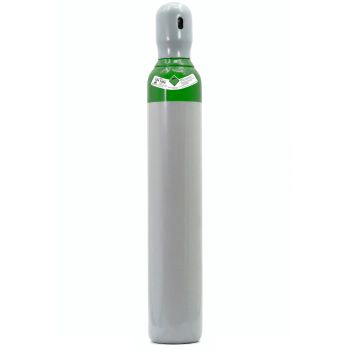
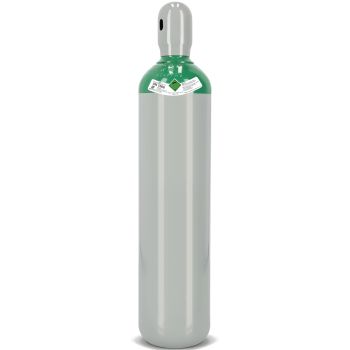
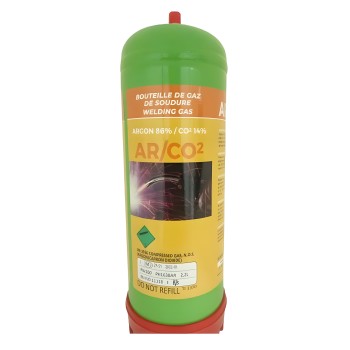
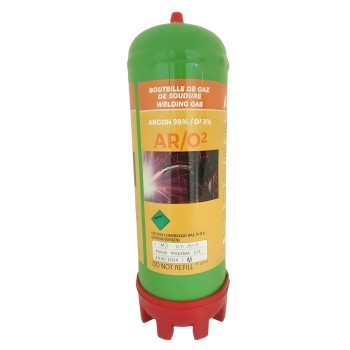
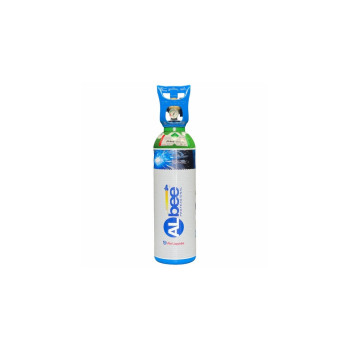
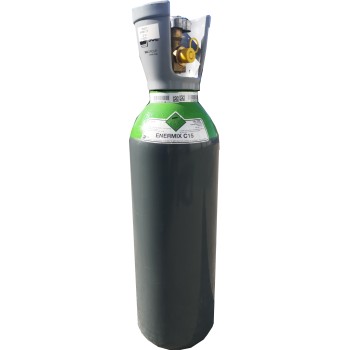
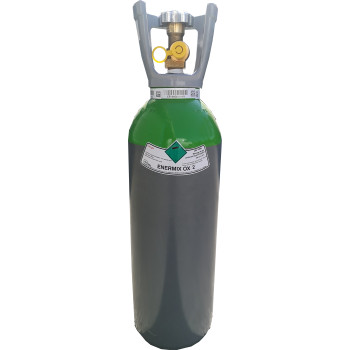
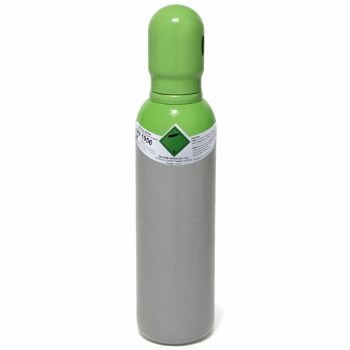
The MIG MAG gas cylinder is essential for semi-automatic welding under gas shielding. The welding gas protects the weld pool from oxidation by the air and guarantees a clean and strong bead. Discover our selection of gas cylinders suited to MIG/MAG welding, as well as our advice on choosing the right mixture depending on the metal being worked.
What is the purpose of gas in MIG/MAG welding?
During welding, the molten metal reacts violently with the oxygen and nitrogen in the air, creating porosity and weaknesses. The MIG gas forms a shield around the arc and the weld pool, preventing this contamination. Without this welding gas, it is impossible to obtain a sound bead in MIG/MAG. This is why the cylinder is an integral part of the setup, just like the machine and the wire reel.
MIG or MAG: which gas for which metal?
The choice of gas depends on the metal. For steel, an active MAG gas is used, generally an argon-CO₂ mixture, which ensures good penetration and a stable arc. For aluminium and non-ferrous metals, an inert gas, pure argon, is used in MIG mode. Stainless steel is most often welded with specific argon-based mixtures. Matching the MIG welding gas to the metal is essential for bead quality.
Argon-CO₂ mixtures
The argon-CO₂ mixture is the most common MIG gas for steel. The proportion of CO₂ influences arc behaviour: the higher it is, the better the penetration, but the more spatter there is. Low CO₂ mixtures offer a softer arc and a cleaner bead. Our range of argon-CO₂ cylinders offers mixtures suited to the most common applications.
What cylinder size should you choose?
Welding gas cylinders come in several sizes. For occasional home use, a small cylinder is sufficient and easy to store. For a workshop or regular use, a larger capacity cylinder avoids frequent refills. Also consider the no-commitment solution: our rechargeable cylinders with no contract allow you to avoid annual rental contracts.
Regulator and accessories
A MIG argon cylinder is never used alone. A flow regulator controls the pressure and sets the gas flow rate, a determining parameter for pool protection. Too low a flow rate lets air through; too high a flow rate creates turbulence that draws in ambient air. For transport and safety, always secure the cylinder on a machine trolley fitted with straps.
Safety first
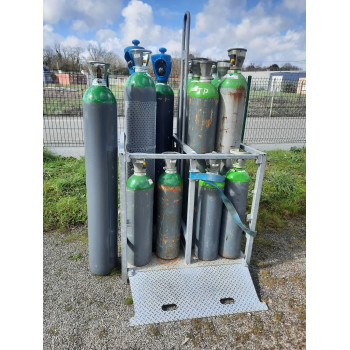
Compressed gas requires precautions. Store cylinders upright, secured, in a ventilated area away from any heat source. Always close the valve after use and before any movement. Regularly check the tightness of connections with soapy water, never with a flame. These simple steps ensure the safe use of your MIG MAG gas cylinder.
Flow rate adjustment
The welding gas flow rate is set in litres per minute on the flow regulator. As a guide, 8 to 12 l/min is often used in a workshop, to be adjusted according to the nozzle diameter and conditions. Outdoors, wind disperses the gas: it is then better to use gasless flux-cored wire, which generates its own shielding.
Owning or renting a cylinder?
The cost of welding gas depends as much on the cylinder as on the gas itself. Classic rental imposes an annual fee that runs whether you weld a lot or not. Buying a rechargeable cylinder outright eliminates this subscription: it is often much more cost-effective for occasional to regular use. Our rechargeable cylinders with no contract allow you to avoid rental. Weigh up your frequency of use: for a workshop that consumes continuously, large capacity is key; for a DIY user, outright ownership without a contract avoids unnecessary recurring costs. In all cases, the flow regulator remains essential.
Our advice
Choose your MIG welding gas according to the metal: argon-CO₂ for steel, pure argon for aluminium. Opt for a capacity suited to your frequency of use and do not forget the flow regulator. To avoid the constraints of rental, consider rechargeable cylinders with no contract. Browse our selection of MIG/MAG gas cylinders and equip your machine for clean and durable welds.
Frequently asked questions
What gas should be used for welding steel with MIG MAG?
An argon-CO₂ mixture (active gas, MAG mode), which ensures good penetration and a stable arc on steel. The proportion of CO₂ influences penetration and spatter: more CO₂ penetrates deeper but produces more spatter. Low CO₂ mixtures give a cleaner bead.
What is the difference between MIG gas and MAG gas?
MIG gas is an inert gas (pure argon) used for aluminium and non-ferrous metals. MAG gas is an active gas (argon-CO₂ mixture) used for steel and stainless steel. The choice depends on the metal being welded: inert for non-ferrous, active for steel.
What gas flow rate should be set for MIG MAG welding?
In a workshop, the flow rate is often set between 8 and 12 l/min, to be adjusted according to the nozzle diameter and conditions. Too low a flow rate lets air through and creates porosity; too high a flow rate generates turbulence. Outdoors, wind disperses the gas: flux-cored wire is then the better choice.
Can you buy a MIG gas cylinder without a rental contract?
Yes. Rather than renting a cylinder with an annual fee, you can buy a rechargeable cylinder with no contract: it belongs to you and you refill or exchange it freely. For occasional to regular use, this is often much more economical in the long run.
What is the price of a MIG gas cylinder?
The price of a welding gas cylinder depends on the gas, the capacity and whether it comes with or without a contract. Argon and MIG-MAG mixtures are the most common for welding machines.


 Italy
Italy
 Germany
 Croatia
 Denmark
 Finland
 Greece
 Ireland
 Portugal
 Sweden
 Norway
 Bulgaria
 Estonia
 Latvia
 Lithuania
 Poland
 Czech Republic
 Romania
 Slovakia
 Slovenia
 Hungary
 Spain
Spain



 2-year warranty